


The Negations That Never Ends
Luxury outerwear has never been static. Negotiation is built into the fabric of its being. At every moment of its history, the coat sitting on the atelier table has been the result of a compromise, between what nature could provide, what culture would allow, and what artisans could make of it. The resources changed. The shapes changed. The connotations of wearing one thing over another changed. But one constant has remained: when the conditions of material supply change, fashion shifts to meet them.
This is not a tale of trends. Nor is it a story about any one material falling in or out of fashion. It’s a story about systems. Of resource and scarcity and craft and culture and consumer demand all bundled together, and pulling each other along. Systems that have always defined what luxury outerwear is made of, and what it means to wear it.
Every time someone tells me they feel like real fur is “back”, I want to correct them. The line feels misguided to me, because it implies return. It makes what’s happening to fur sound cyclical and silly: as though the industry forgot how to work with it, and then one day remembered. What’s actually happening runs deeper than that, and is far more fascinating.
Right now, what’s happening with fur is what always happens when the materials landscape changes: designers adjust. Consumers shift their expectations. Resale markets spring into action. And we’re forced to ask questions, about value, what a garment is worth and what it costs us over time, what it means to own one, anew. If we want to understand it, we have to understand what’s always been at the force.
The Material Ecosystem of Luxury Outerwear
“Material ecosystem” isn’t an expression you hear frequently applied to fashion, but it accurately describes something that exists. Every material that finds its way into luxury outerwear is part of an ecosystem of conditions: the farming or harvesting operations that grow or raise it, the auction and trading ecosystems that set prices and make it available for purchase, the regulations that control how easily it crosses borders, the artisanal ecosystems that have or haven’t developed techniques for working with it, and of course the cultural meaning that animates wearing one material over another.
When something changes in that ecosystem — supply diminishes, an auction market dramatically reprices, regulations adjust, cultural narratives take a sudden turn — everything that touches that material shifts slightly. Designers notice first; they buy seasons in advance. Then ateliers notice, as their ability to source freely begins to feel more constrained (or, sometimes, more creatively complex). Then consumers notice, as the garments offered to them subtly change in material, silhouette, price, and meaning.
This is not a new pattern. Luxury outerwear has always existed in relationship to the material conditions around it. Mink became dominant through much of the twentieth century not just because people liked how it looked and felt, but because fur farming expanded, auction systems developed that could standardize grading and pricing, and postwar economies allowed more middle-class consumers access to mink coats than ever before. When these conditions changed, the dominance of mink began to weaken. It didn’t happen because fashion declared mink coats to be passé. It happened because the ecosystem that had allowed for flood of mink coats suddenly changed.
You can track this pattern across multiple materials. Peak fox was achieved when farm conditions across key regions produced bigger, flashier pelts in sufficient quantity to feed into atelier production at scale. Shearling rose in prominence because it was able to claim a position that felt slightly less tenuous than traditional fur at times of intense ethical debate, while also offering the weight, warmth, and longevity that serious outerwear requires. Technical textiles became luxuriated not because designers developed a newfound love of synthetics, but because material innovations produced genuine high-end performance functions that certain luxury consumers found useful, and traditionally-focused materials were feeling supply squeezes.
Each of these inflection points was prompted by a change outside fashion. Fashion’s reaction to that change looks like a trend from the outside. To those who live and breathe it day in and day out, it’s an adaptation to new material conditions.
How Supply Shifts Reshape Design
Supply and design are closer than you think. Luxury outerwear doesn’t get designed independently from materials considerations. In the top ateliers, design is done in conversation with material, and when the supply of a material changes, the design has to respond.
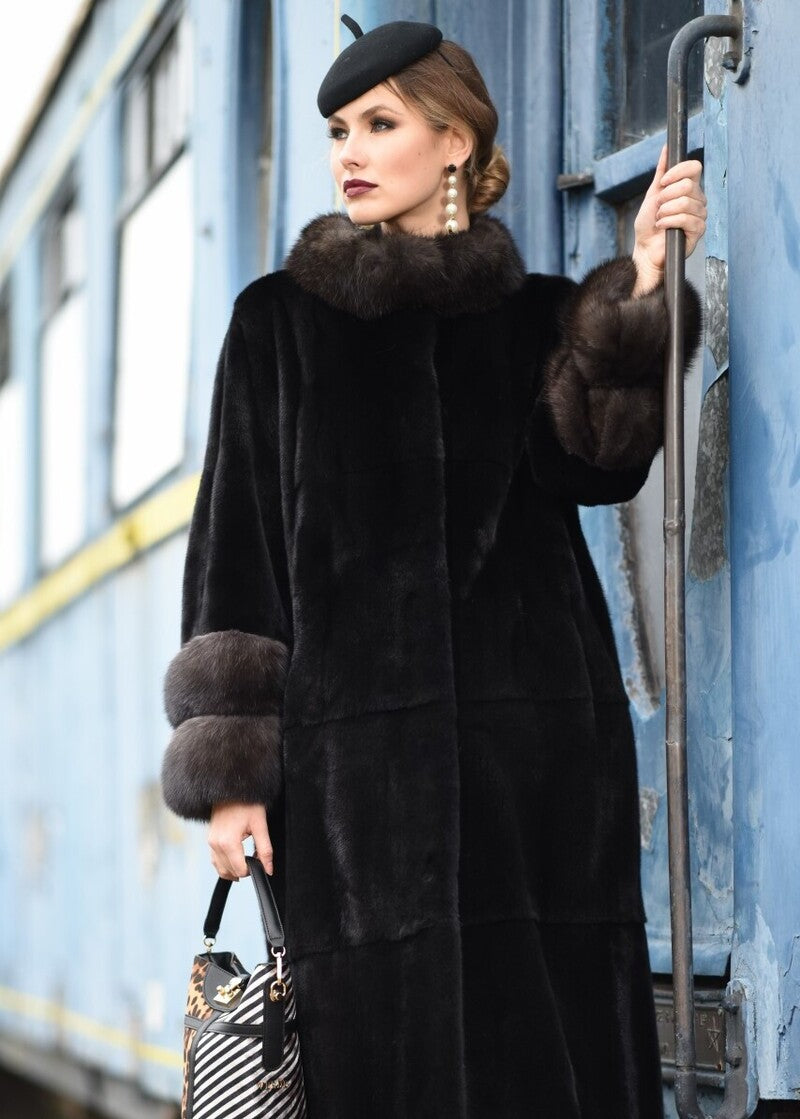
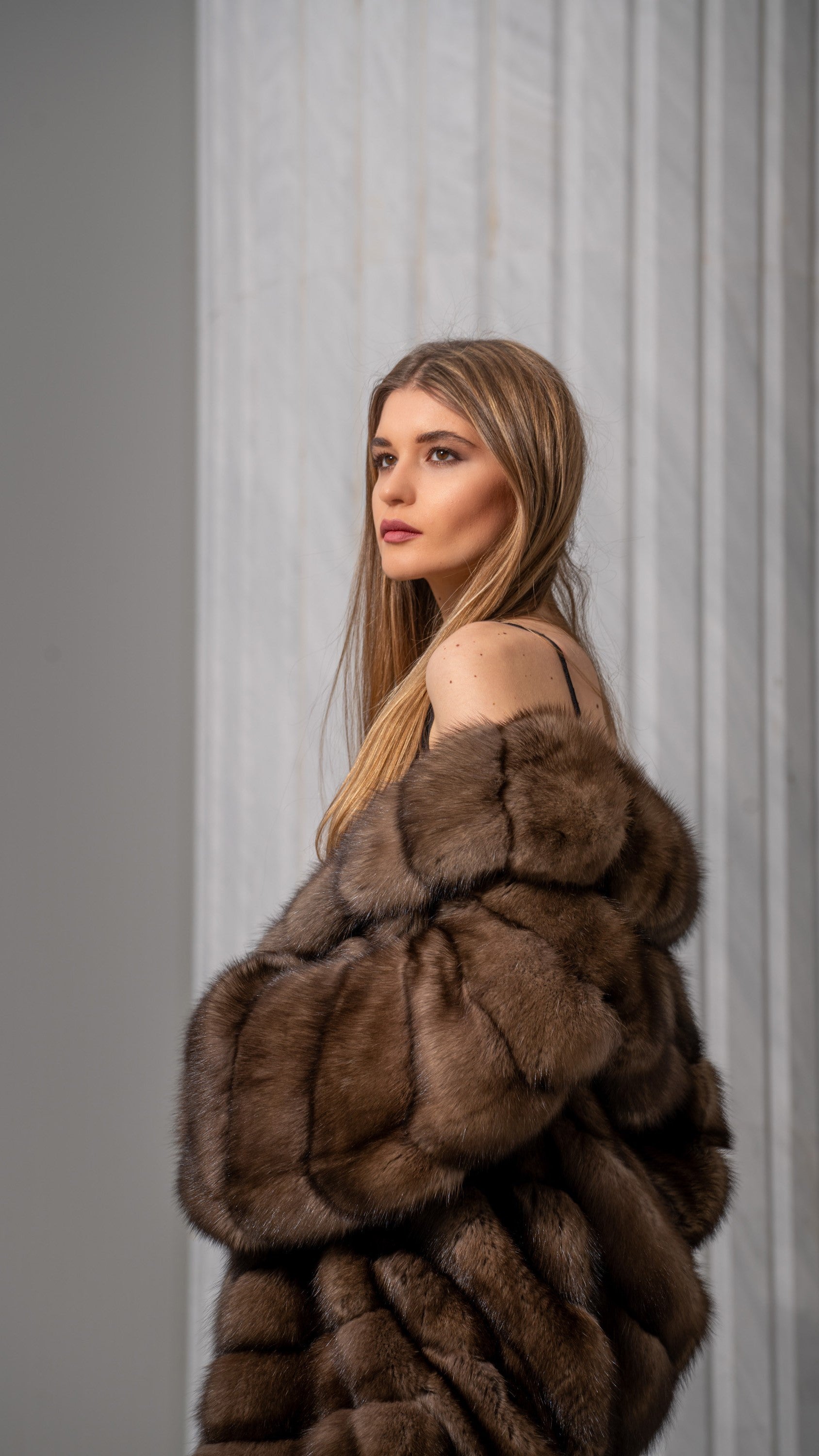
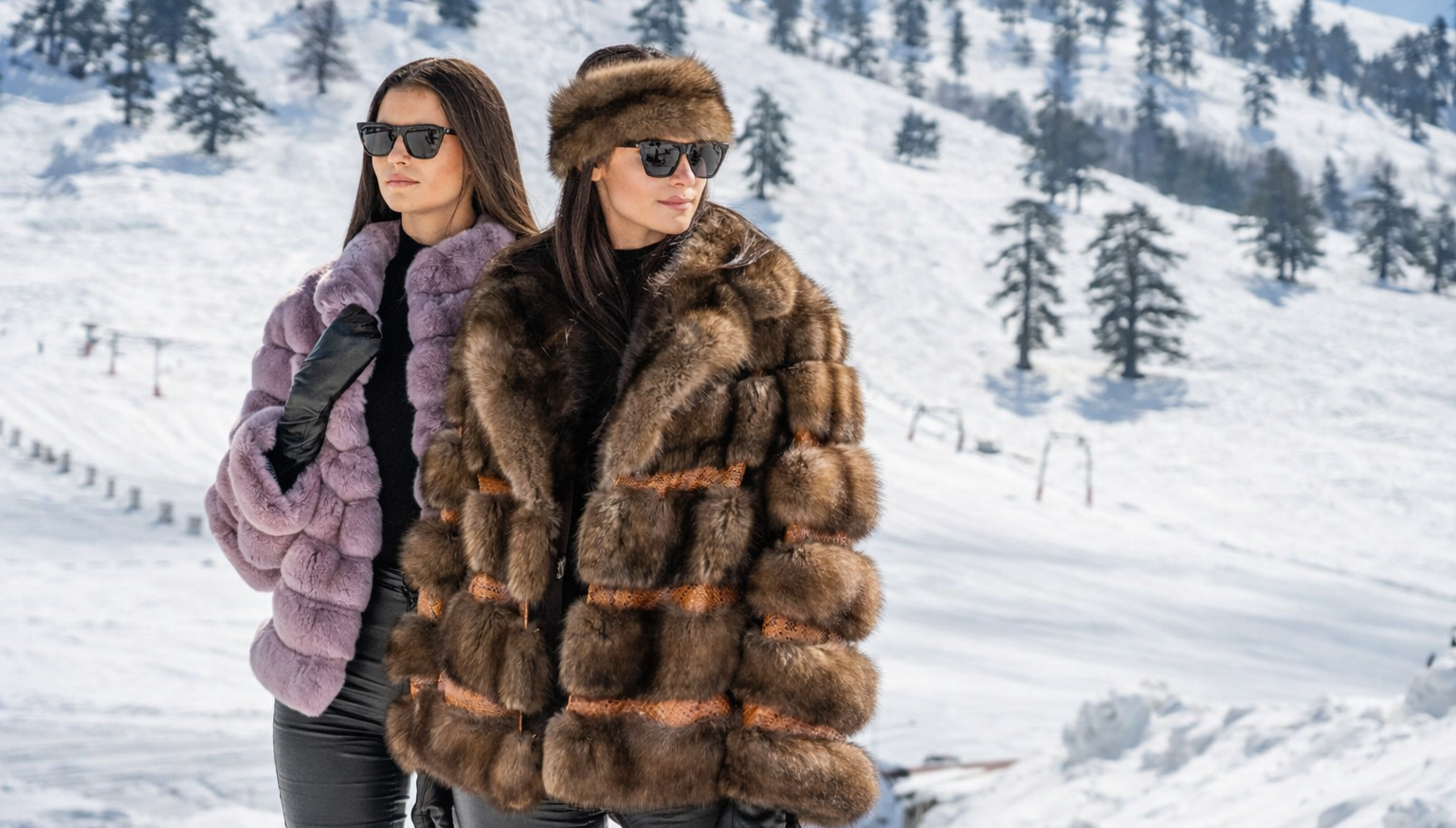
This starts at the level of the individual pelt. Different animals have pelts of different sizes, weights, and textures. Those characteristics inevitably determine what you can do with a garment. Mink are small and uniform, lending themselves to tidy construction and dense application that results in smooth surfaces and sleek, architectural shapes. Foxes are big and sparse, with thick pile that lends itself to bulk and drama and garments designed to fill space. Chinchilla is extremely light and fine, opening up possibilities for layering and intricate construction that would be unthinkable in heavier materials. Sable is arguably the most luxurious of all the traditional luxury pelts because of its density and pliability.
Shifts in supply conditions, scarcity, price changes, or difficulty sourcing enough high-quality material to meet an atelier’s needs, create immediate design consequences. If a house has centered its outerwear designs around a particular material, they either need to find ways to ensure continued access to that material, or else change their designs to accommodate what they can get, or else risk pivoting to something else entirely that can approximate the same look and feel.
They usually don’t announce these pivots. But you can spot them in collections as changes in silhouette, proportion, and texture. When you see a brand moving away from sleek engineered shapes more commonly associated with high-end mink into bigger, looser silhouettes that feels more “fox” or “shearling,” it’s not just a style choice. Those materials come in different shapes and sizes and require designers to think about cuts and construction differently. The design is speaking to you about what it’s made of, even if the label isn’t.
Few people see this side of the business, but fur auction markets are a big reason why. The big fur auction houses act as something like the market pricing mechanisms for the whole industry. The information that flows from them about availability, quality grading, and relative prices of different pelt types flows directly into buying decisions made at ateliers one or more year before those resulting coats land on store shelves. And when auction prices rise or fall dramatically for a specific animal type, it doesn’t just change how much something costs, it changes how that material gets used. Materials that rise in price get used more conservatively. They show up less, often in small details rather than whole garments. Materials that grow more available become frontiers for designers to experiment with.
This is how supply decisions get translated into “spring fox is in” and “torsos are popular this year.” It really is a trend. It’s just not one caused by some innate human capriciousness. It’s caused by materials.
The Faux Fur Problem
Faux fur became popular when real fur itself became culturally fraught, decades of activism, brand prerogatives changing, thoughtful discussion about animal cruelty in fashion. To wit: synthetic fur offered something easier to love. Faux fur became the feel and look of fur without the moral quandary. This story held true for some time. Recently it’s been questioned, and interestingly enough, questioned through facts, not feelings.
Problem number one: origin. Most faux fur is made from acrylic or modacrylic fibers, both of which are derived from petroleum and created in a chemical industrial process. An alternative fabric meant to exist morally opposed to animal husbandry is, for the vast majority of options out there, a byproduct of oil drilling. Now this doesn’t mean fake fur is automatically damaging than real fur across all environmentally conscious categories, but what it does mean is that pretending like purchasing faux fur over real fur is an easy decision on behalf of the consumer is disingenuous.
Problem number two: longevity. And this is where faux fur really divorces itself from the real stuff for the luxury consumer. A quality fur garment in real fur that’s stored properly, conditioned occasionally, and brushed like any other coat can last decades. True. Fur can be re-lined, re-made, let out or taken in should your body or fashion ideals change. Fur can be handed down through generations and worn again. This isn’t conjecture. This isn’t an opinion. Fur can do this because of the material qualities of well-tanned and constructed animal pelts.
Fake fur cannot. The fibers break down. The pile wears flat and matted. The base fabric wears thin. Most faux fur will only last you a few years where real fur can last you generations, and caring for faux fur does not count, because it cannot be restored like real fur can. When your faux fur wears out, it goes to a landfill where those petroleum fabrics will sit… forever.
Now this is not to say that owning or purchasing real fur doesn’t have ethical quandaries. Of course it does. There are many layers to consider when buying animal products. But pretending like fake fur exists in a world free of those concerns doesn’t hold up either. Yes, fake fur doesn’t require you to think about animal cruelty. But think about what you’re buying instead. Faux fur’s biggest selling points aren’t as clean as you might think.
The Cyclical Nature of Dominant Materials
There’s one historical pattern in luxury outerwear that seems exceptionally consistent. No material stays on top forever. There’s always a dominant one, the material that most readily calls to mind the silhouette, confers the status, and serves as the basis against which other options are compared. But that dominant material doesn’t stay dominant forever. At some point, conditions shift: prices, production quantities, consumer attitudes, and cultural meanings rotate around a new north star.
This isn’t chaos. There’s rhyme and reason to the cycle. A material emerges as dominant when it has broad strength across the variables that drive consumer decision-making: stable supply, easy affordability within the market tier, established traditions of craftsmanship, and a relevant or yearning cultural association attached to wearing it. It ascends to peak dominance. Then the variables shift, supply gets constricted, ethics concerns grow louder, a new material emerges to challenge it, or fashion simply rotates enough that the material starts to feel tired rather than coveted. The once-dominant material contracts. Another grows.
Think back on the last century of fashion, and you’ll see this process most clearly with furs. For the better part of the 1900s, mink was the undisputed peak of fur luxury. Beyond its relatively widespread availability due to supply factors, mink also truly did occupy a material sweet spot of density, shine, size consistency across pelts, and ease of construction. As challenges to farm operations arose, regulations tightened in key production regions, and ethical debates grew more urgent, mink began to lose its dominance.
What rose up to take mink’s place was not a single alternative but many. Fox filled some of the space with dramatic, fuller skins. Shearling benefitted from warmth, versatility, and distance from thick-haired fur’s fraught cultural associations. Cashmere and heirloom wool blends climbed the ladder, buoyed by demand from luxury buyers who wanted serious outerwear without the fur question. Down and other technical textiles invaded from the performance direction.
Flash forward to today, and it’s easy to see some of the same pendulum motion emerging on the other side. Synthetic substitutes have fulfilled some of the market’s needs, but they cannot solve for demand centered on material luxury. As questioning of those materials grows among certain consumer segments, and producers develop new methods to address the ethical questions, we’re starting to see a minor rotation back toward heritage fur. Not a revolution, today’s market is too bottomless and diverse for any one material to fill mink’s historical role, but a meaningful resurgence of interest in materials that had been previously relegated to niches. People who care about what they wear are buying chinchilla jackets again. They’re buying broadtail. They’re buying sable. Fox is having a moment. Shearling isn’t being replaced; it’s gaining company.
Inner continuities like this are rarely visible to the naked eye. From the outside, this process tends to look like either total upheaval or nothing at all. But for those paying attention, the coming years will show steady growth in demand for many of the specialty furs that have gone underappreciated for decades.
Investment Dressing and the Durability Shift
Luxury consumers care about something new, but they care about something else just as much: longevity.
For some time now, there’s been two separate logics at work in luxury fashion. One was built around novelty: the new collection, the new season, the new vision from a particular house. Buying the latest manifestation of a label’s creative vision was the value proposition. Of course, this has never applied to everyone, true lovers of craft and material have always been organized around something else entirely, but it did dominate the industry enough to guide products and product releases for decades.
Today, though, you see another logic taking hold. It’s focused not on newness, but on longevity and sustainability: How long will this piece last? How easy is it to care for? How many times can I wear it before it’s worn out? Cost-per-wear calculations, in which you divide the price of a garment by the number of times you’ll wear it over its lifetime, have gone from quirky bragging points to the primary framework many luxury consumers use to consider purchases. When you view a garment through that lens, material durability becomes much more important.
That’s why real fur and shearling are becoming more important than ever. Plastic and Fast-luxury clothes simply can’t match it. A well-made coat will get softer with each wear, acquire a patina that accents rather than undermines the beauty of its design, and adjust to your body rather than wear you down. A well-made coat can be let out if you gain weight, taken in if you lose it. It can be re-lined if the interior fabric wears before the exterior does. It can be repaired with basic care. And when the time comes, it can be handed down to your children, or to anyone you choose.
That last point is why this second logic matters. Passing a piece down to your children isn’t just sentimental. It’s financial. A coat that can be worn for decades means something very different when you consider cost-per-wear than one that can only be worn for a few seasons. It changes the math when that denominator gets larger.
When CASIANI was founded, we built everything we did around that philosophy. We wanted to know what a coat looked like after 30 years, not just three. How it could be cared for to last that long. How its materials would age over time. What it meant to create something that we hoped our clients would one day pass on to their children. That thinking is still somewhat niche, though it’s becoming much less so. As consumers start to think of luxury outerwear as potential heirlooms rather than just seasonal purchases, that philosophy will become standard by which all serious outerwear is judged.
Craftmanship and Material Literacy
Skills become more precious, and more apparent, when materials are scarce, contested, or selective. That’s one of the less-discussed impacts of shifting material supply chains: they increase the value of craft.
When material is plentiful and homogenous, you can assume a baseline knowledge of craft. When supply is reliable, design and construction are the primary variables. As materials become limited or diversified, when an atelier must source from more pelts of varying types, grades, and provenance conditions, significant craft expertise is required to create a finished product of consistent quality.
Pelt grading is one example. Not all fur pelts are created equal. Even within a species, farmed in the same place, there can be dramatic differences in density, sheen, color accuracy, and dimensionality. The highest ateliers grade their pelts meticulously before cutting begins, sorting those that will and won’t match in a single coat. Done by people who know what they’re doing and invisible to the person wearing the finished coat, this process is one of the leading factors that determine the aesthetic longevity of a fur garment.
Matching is another. Fur garments are made from individual pelts, which must be matched by shade, weave, and pile direction in order to create a cohesive surface. Done expertly, on luxury garments the seaming can be nearly imperceptible. Done poorly, it can make a coat look cheap. There’s no difference in materials, only knowledge and attention to detail.
Finishing processes, glazing, leathering, conditioning, lining, introduce additional levels of craft that determine the way a garment will move and age with its wearer. A well finished coat will drape properly against the body, breathe as it should, and retain its outer qualities for years. A poorly finished coat won’t. And no amount of superior pelts can fix it.
Questions of provenance are also increasingly factoring into material literacy for luxury clients. Where were the pelts sourced? What welfare standards were they raised under? What quality conditions? How were they processed? What about tanning? These questions used to be considered the domain of industry wonks, but consumers are learning that they have real impacts on the ethical and durable nature of their purchases.
Our approach to material knowledge informs every aspect of CASIANI design. We don’t choose materials to execute against an idea, we know our materials well enough to let them inform our designs from the start. In an industry that’s placing more and more value on material literacy, that kind of intention is becoming a point of difference.
What This Means for Luxury Outerwear Going Forward
The materials world of luxury outerwear is currently going through a period of genuine flux. No single material has clear dominance over the others. Raw material availability continues to fluctuate. Consumers are reevaluating their values. The sustainability dialogue has splintered: it’s not been solved, it has broken into a series of complex questions that different people answer in different ways. And the narrative around synthetic alternatives, which for a time looked like it might provide a facile solution to all of that complexity, has started to show its own limitations.
What will ultimately emerge from all this flux isn’t entropy. It’s space for brands and ateliers that know their materials to set the agenda.
One of those agenda items will be transparency. Today’s luxury consumer wants to know what their clothes are made of, where those materials came from, and how they were made. That desire isn’t new, but it isn’t going away either. Brands that can speak intelligently and credibly about the supply chain behind a garment, not through marketing spin, but through actual materials knowledge, will be able to stake out an authoritative voice that competitors will struggle to fake.
Education will be another. There’s a gap between what someone who’s really well-informed about fur knows about different outerwear materials, and what the average luxury consumer thinks about those same materials. That’s a gap that savvy ateliers can fill by taking the time to explain, whether through blog posts, or in-store conversations, or articles like this, what these materials are, how they behave differently, and what all that means when you’re choosing one or another.
Likewise, durability and repairability will continue to be things that luxury consumers care about. The person who thinks about her luxury purchases in terms of decades rather than seasons is no longer a niche market; she’s starting to define the market itself. If your outerwear can’t be cared for, doesn’t last years of wear, and can’t be easily repaired or handed down, it’s starting to look less and less like luxury, and more and more like just expensive. The difference will matter to customers, and it will matter to resale values.
Of the materials that will come to define this next chapter, it’s still unclear which will have staying power. Are sable, chinchilla, and broadtail about to enjoy a resurgence among aficionados? Will fox continue its meteoric expansion? Does shearling remain the cool, old center of gravity for everything else? Will natural wovens continue to hold their own? The smart money isn’t on one answer or another; it’s on ateliers that are well positioned no matter what the next materials landscape has to offer, by understanding their materials well enough to work with excellence no matter what comes available.
Understanding your materials. Literacy in the nuances of how they’re created and where they’re sourced. Knowing how to use them in ways that will last decades, not just seasons. That’s what luxury outerwear’s most informed consumers will start to demand from their brands. It’s also, incidentally, what separates a coat that will last a lifetime from one that will just run you bankrupt.