


The short answer
For most buyers, female mink is the better coat. It is lighter, softer and drapes more fluidly, and those are the differences you actually notice across a full season of wear.
Male mink wins on durability and deep cold. Thicker leather, denser underfur and tougher guard hairs, usually at a lower price for the same quality grade.
The decision rule: choose female mink if you will wear the coat often, in a temperate or continental city, and you care how it moves. Choose male mink if you need maximum warmth in severe cold, the longest possible lifespan, or the best value per dollar at a given grade.
If you are shopping for a real mink coat with any seriousness, this question comes up early. It is also one of the least satisfyingly answered. Walk into most fur shops and you will be told it is simply a matter of preference, as though that settles it.
It does not. Male and female mink pelts are two distinct materials. They drape differently on the body, they age differently over decades, and they suit different garments and different climates. Among the types of mink coats you will be shown, this is the distinction that changes the most about how the coat behaves once you own it.

Male vs Female Mink at a Glance
| What you are comparing | Female mink | Male mink | Better for most buyers |
|---|---|---|---|
| Pelt size | Smaller, shorter, thinner leather | Longer and wider, up to roughly twice the area | Depends on cut |
| Weight in a finished coat | Noticeably lighter | Heavier | Female |
| Softness | Finer guard hair and underfur, silkier | Fuller, slightly coarser | Female |
| Drape and movement | Fluid, follows the body | More structured, holds shape | Female |
| Warmth | Ample for almost any winter | Slightly warmer, denser underfur | Male, marginally |
| Durability | Long-lasting, wears at edges sooner | Thicker leather, sheds less over decades | Male |
| Seams across the back | More pelts, more seams | Fewer pelts, cleaner panels | Male |
| Price at equal grade | Higher, more matching labour | Lower for comparable quality | Male |
| Best suited to | Daily wear, fitted cuts, travel | Severe cold, occasional formal wear, heirloom use | Your call |
The Physical Difference Between Male and Female Mink Skins
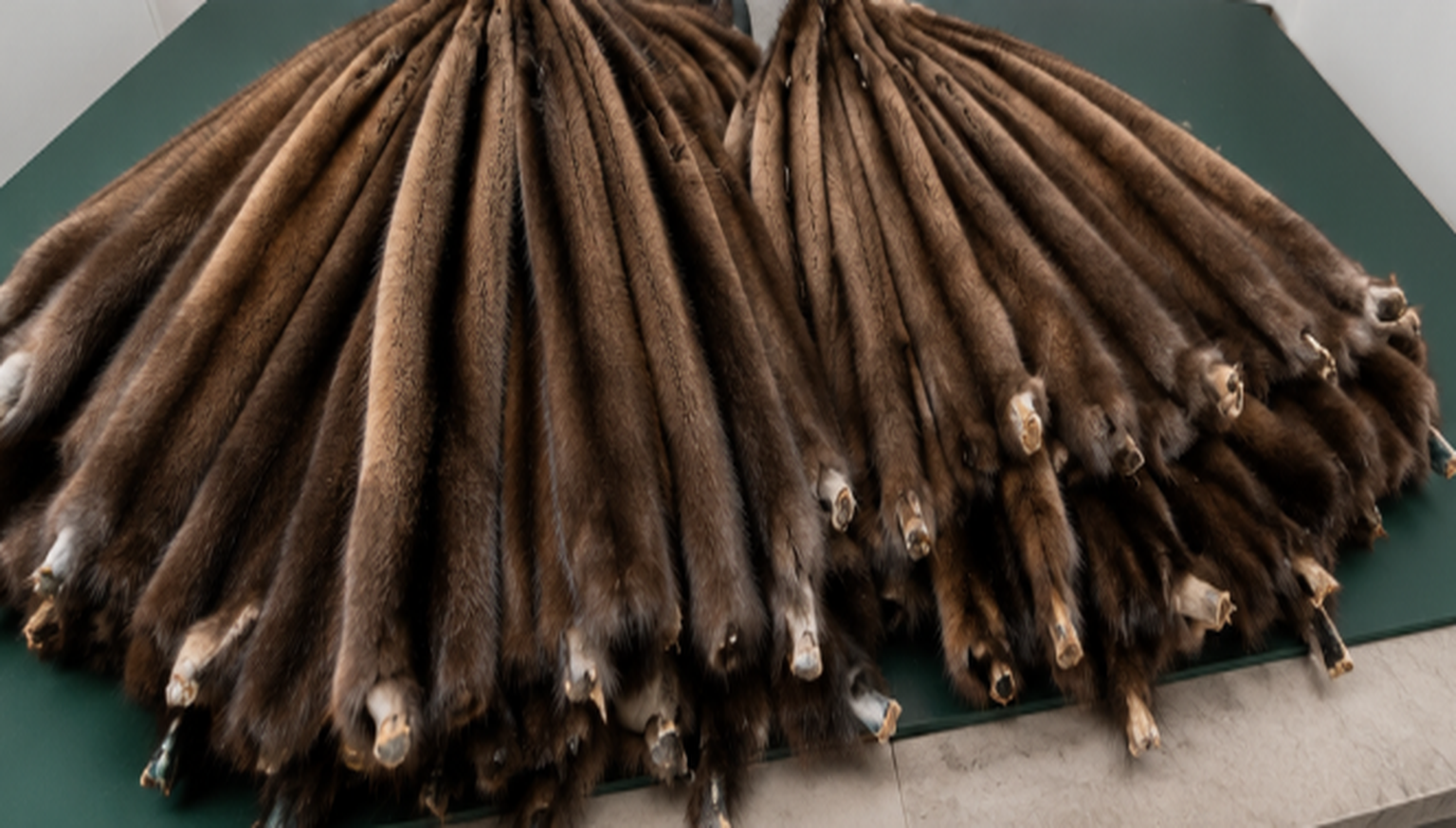
Start with size. Male mink pelts run substantially longer and wider than female pelts, and depending on the animal a male skin can approach twice the surface area of a female one. Saga Furs, which grades and auctions a large share of the world's farmed mink, treats sex as a formal sorting criterion and describes it plainly: males are longer and wider, females are shorter with thinner leather, and male skins are not necessarily better in quality (Saga Furs, Grading System: Sex).

That size gap is not trivial. It changes how many skins a coat needs, how the panels are laid out, and how the finished garment feels when worn.
Beyond size, the fur itself differs. On female skins the guard hairs, the long outer hairs that give mink its depth and shine, are shorter and finer. The underfur beneath them is finer too. The result is a pelt that feels silkier against the skin, lighter in the hand and more fluid in its fall.
Male skins carry longer guard hairs over a denser underfur. The texture reads as fuller and marginally coarser. Do not over-weight the word coarser: prime male mink is extraordinarily soft by any normal standard. Picking up a male skin, you notice character. Picking up a female skin, you notice refinement.
Is Female Mink Actually Softer?
Yes, most of the time. How much softer depends on grade and on which farm the skins came from.
Female mink is generally accepted in the trade as the softer of the two, because the guard hair and underfur fibres are finer in diameter. That is why female skins have long been the default for fitted, elegant garments and for anything worn close to the skin, including coat linings, stoles and short jackets.
The caveat matters more than the rule. High-grade male mink from the better Scandinavian farms in Denmark and Finland can feel every bit as soft as an average female skin. The gap between a prime male and a prime female is far narrower than the gap between prime and mid-grade skins of either sex. When you are judging softness in a showroom, grade and origin carry at least as much weight as sex.
Weight and Drape in a Finished Coat
Because male skins are larger, fewer are needed to cover the same area. Fewer pelts means fewer seams across the back and shoulders, which produces cleaner, less interrupted panels. That is a genuine aesthetic advantage, particularly on full pelt mink coats where the skins run vertically and the seam lines are visible.
The trade-off is weight. A male mink coat will almost always be heavier, from both the denser underfur and the larger, thicker pelts. You will not register this lifting the coat off the rail. You will register it at hour six of wearing it. On a full-length coat, for a petite frame, or on a travel day, the difference stops being academic.
Female coats are lighter and move more fluidly. When an atelier sets out to build something light and easy to wear, it starts with female skins.
Built on female skins for exactly this reason
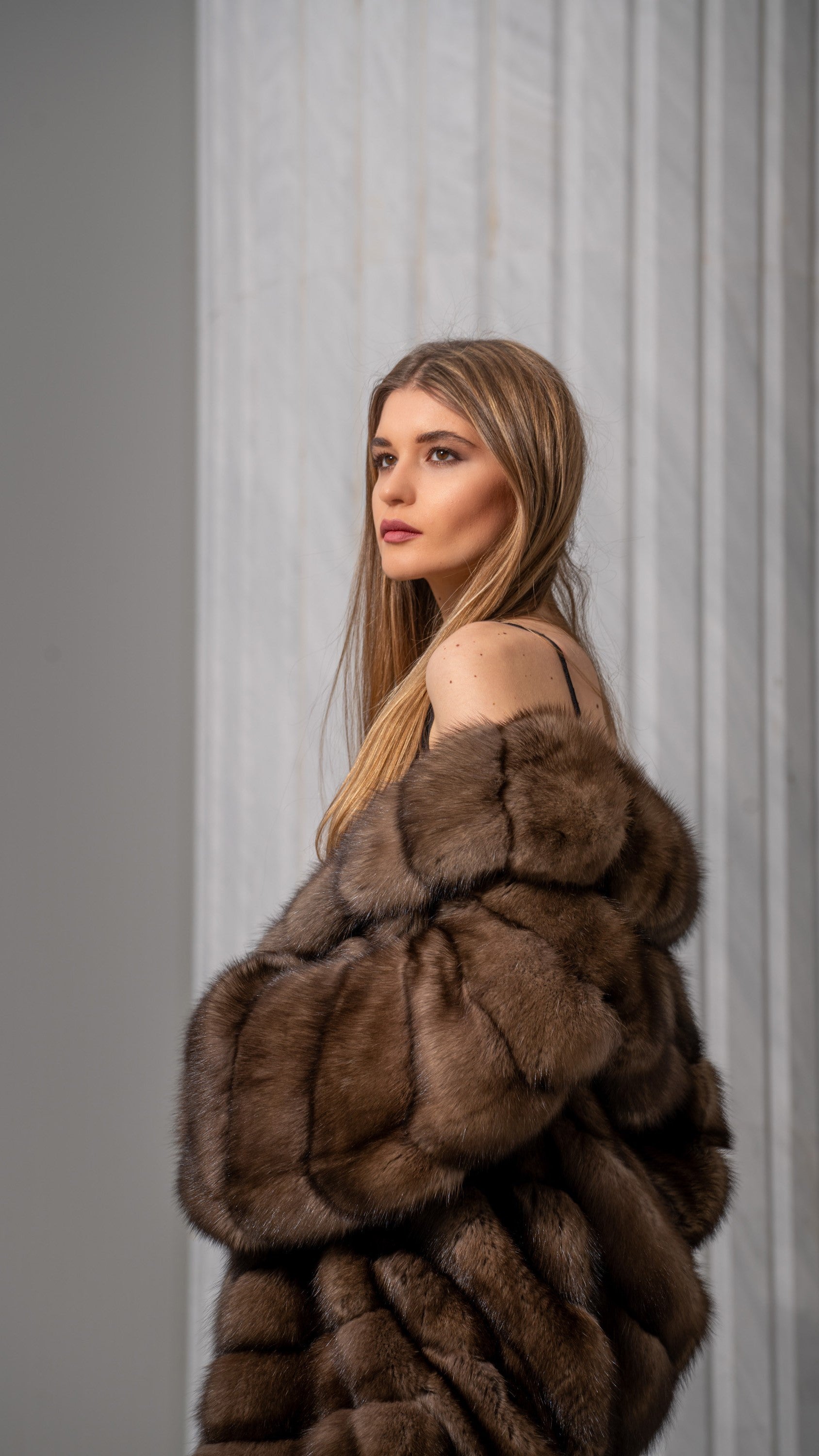
The Grey Moon Mink Jacket with Stand Collar and Zipper is cut short and light for repeat wear rather than occasion wear. From $3,240.
Which Mink Is Warmer, and Does It Matter Where You Live?
Male mink is warmer, technically. More underfur per square inch means marginally more insulation. In practice you are unlikely to feel it.
Both are extravagantly warm, well past what any climate humans actually live in demands. A quality female mink coat handles Chicago, Toronto, Montreal or St Petersburg without complaint. Russian furriers have built female mink coats for generations without anyone reporting they were underdressed.
The difference starts to count only at sustained sub-zero exposure. If you are looking for the best mink fur coats for cold climates in the literal sense, meaning months below freezing in northern Canada or northern Scandinavia, a male mink coat gives you that slightly denser underfur and the extra margin. If you live in New York, London or Athens, the warmth gap between male and female mink is not a real factor in the decision.
Durability: Which Mink Coat Lasts Longer
Male mink is the more durable material. The leather side of the pelt has more substance to it, and the guard hairs are tougher, so a male coat sheds less across decades of wear.
A well-graded male mink coat that has been stored properly can comfortably pass thirty years. Female coats are also extremely durable measured against any other outerwear material, but they will show wear sooner at stress points and along the edges, particularly under heavy rotation.
Storage matters more than sex, though. Either coat will fail early if it spends its summers in a sealed garment bag in a warm cupboard. Our guide to cleaning and storing a fur coat covers what actually preserves a pelt over decades.
Why Female Mink Usually Costs More
This surprises people. It seems backwards that garments made from larger male pelts should cost less.
The reason is labour and matching. Female skins are smaller, so a coat needs more of them, and every additional pelt is another one that has to be graded, colour matched and set so the finished panel reads as continuous. More pelts and more skilled matching time go into a female coat than into a comparable male coat.
Practically, that means male mink is an efficient way to buy a genuinely high-grade coat that will outlast you, at a lower number than the female equivalent. It is not a downgrade, it is a different allocation of the budget. Grade, pelt count and the amount of matching labour move the final price far more than sex alone ever does. For a fuller breakdown of what drives the number on the tag, see how much a mink coat costs in 2026.
A full coat, cut for presence
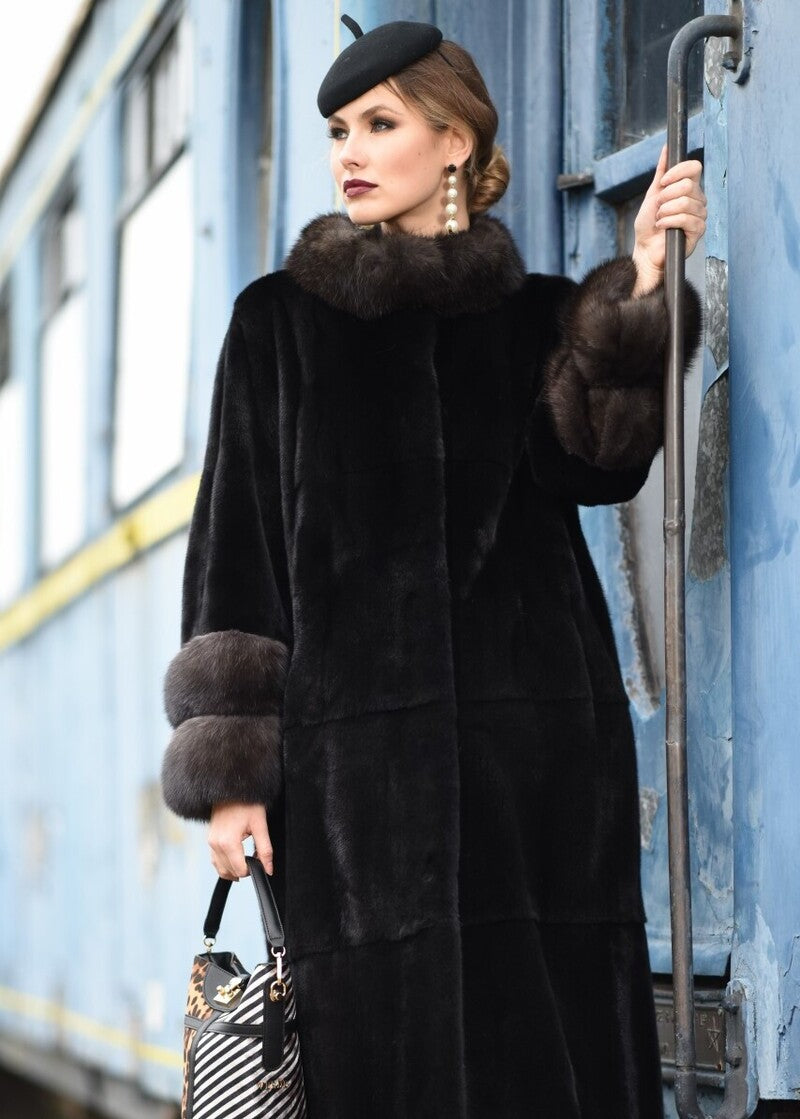
The Collarless Pearl G/W Mink Coat shows what the longer-panel construction looks like when the skins are matched properly. From $4,680.
Every CASIANI piece is hand-built in our Kastoria atelier, with free worldwide shipping.
How to Tell Whether a Coat Uses Male or Female Skins
There is no reliable way to determine this from the outside of a finished coat at a glance, which is exactly why it should be disclosed rather than deduced.
Any reputable furrier will tell you directly. It may also appear on a certificate of authenticity or on the auction house label, since Saga and the other major houses grade and record sex at the pelt stage as part of their standard grading system.
The physical clues are weight and hand. Hold two coats of similar length and cut side by side and the male coat is clearly heavier. Run your hand through both and the female fur reads finer and more evenly silky. In isolation these are hard to judge, which is why comparing coats side by side in an atelier is worth the trip.
Then ask. If a seller cannot or will not tell you whether a coat is male or female mink, that is a useful signal about the seller. The same principle applies to authenticity more broadly, and our piece on how to tell real fur from fake covers the checks worth knowing before you buy.

The Best Mink for Everyday Wear
If you intend to wear the coat regularly across a season, female mink is the better choice for most women.
It is lighter, so it tires you less on a long day. It layers more easily over both light and heavy clothing. It moves as you move, which matters more than it sounds once the coat is doing real work rather than sitting in a wardrobe waiting for an occasion.
Male mink comes into its own for occasional wear in serious cold, for formal occasions where warmth and a certain presence are the point, or when durability is the single priority above all else.
For someone in New York or Chicago who wants one mink that covers both a black-tie evening and Saturday errands in January, a well-made female mink will be the more comfortable coat across both.
Which Mink Coat Is Right for You?
You wear it often, in a normal winter city. Female mink. Lightness and drape are what you will notice daily, and the warmth is more than sufficient.
You want one coat to last thirty years and be handed on. Male mink. Thicker leather and tougher guard hairs give it the longer runway, and fewer seams age more gracefully.
You face genuine deep cold for months at a time. Male mink, for the denser underfur.
You want the most coat for the money at a given grade. Male mink. The same budget buys a higher grade than it would in female.
You want the softest, most fluid thing in the room. Female mink, and pay attention to grade as much as to sex.
Whichever you choose, do the work on the things that matter more than either: the grade of the pelts, the skill of the atelier, and the fit and construction of the coat. A well-graded male coat from an expert furrier will outshine and outlast a lower-graded female coat at the same price, and the reverse is equally true. Sex is a baseline. Build quality decides it.