
Who checks our fur
Casiani does not farm animals and does not buy from dealers. Every pelt in our workshop in Kastoria is bought at auction, and two names sit on the paperwork behind it. WelFur is the audit of the farm. Furmark is the passport that follows the pelt from the auction to the finished coat. This page explains what each one actually checks, and what it does not. For where the skins are bought, auction house by auction house, see our Sourcing Standards.
WelFur: the audit of the farm
WelFur is the animal welfare assessment programme for fur farms in Europe. It covers mink, fox and Finnraccoon, and it was developed between 2009 and 2015 by scientists from seven European universities, using the same Welfare Quality method the EU uses to assess the welfare of cattle, pigs and poultry.
The assessments are not done by the farmer or by the auction house. Independent assessors from Baltic Control visit each farm three times, in winter, in the breeding season and during the growth period, and score it on four principles: good feeding, good housing, good health and appropriate behaviour. A farm that fails is left out of the programme.
Since 2020 the European auction houses we buy from, Saga Furs in Finland and Kopenhagen Fur, have sold only WelFur-certified pelts from European farms. That is where our mink and fox are bought.
Furmark: the passport for the coat
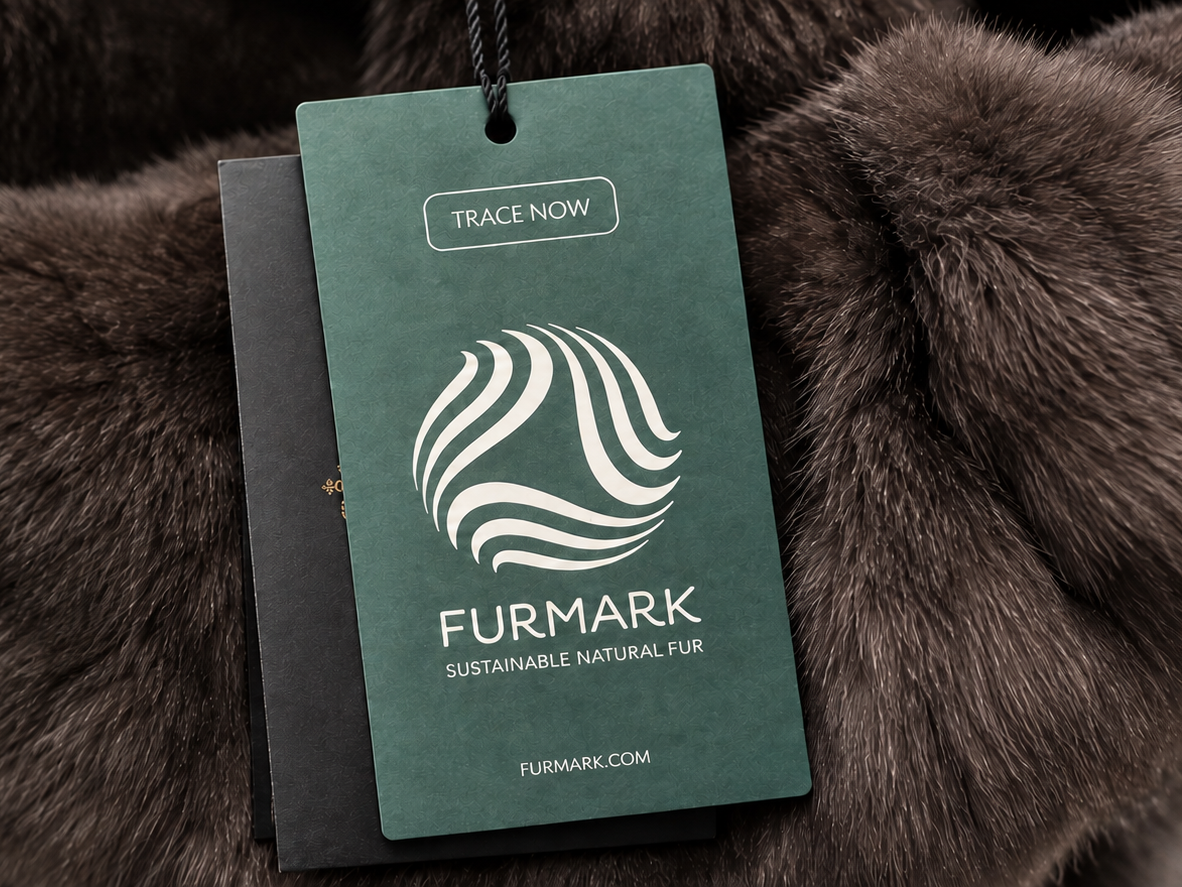
Furmark is the global certification and traceability system for natural fur, launched by the International Fur Federation in 2021. It does not replace WelFur; it builds on it. Furmark recognises WelFur for European farmed fur and adds programmes for the furs WelFur does not cover: North American wild fur, Russian sable, European chinchilla (certified since 2024) and the dressers and dyers who process the skins, who must meet a published chemical standard.
Certified pelts are sold at auction, processed by a certified dresser and recorded by the manufacturer. The finished garment can then carry a Furmark label with a unique code. Enter that code at furmark.com/trace and it shows the fur type, the origin, the welfare programme, the manufacturer and where the coat was made.
Which programme covers which fur
Farm-audited by Baltic Control. Bought at Saga Furs, Finland, and Kopenhagen Fur, Poland.
See the mink collection →Farmed sable is covered by Furmark's Sable programme, with welfare regulations written by the Moscow State Veterinary Academy. Wild sable is sold through the St Petersburg auctions with its origin recorded.
See the sable collection →Regulated seasons and quotas under state and provincial wildlife law. Every bobcat skin carries a CITES export tag.
See the bobcat collection →What certification does, and what it does not
Certification does not settle the argument about fur, and we will not pretend it does. What it means is this: the farms our mink and fox come from are inspected by independent assessors against published standards, the wild fur is taken under regulated seasons and quotas, and the pelt can be traced.
We think you should be able to check that yourself. We have been a member of Furmark since 2022, and we have started embedding its trace code in our coats, one by one, starting with new pieces. For any coat, tagged or not, ask us for the auction, sale date and lot details of its pelts and we will send them.
Questions people ask us
Is WelFur independent?
The protocol was written by university scientists and the farm visits are carried out by Baltic Control, an independent certification body. The programme itself is owned by Fur Europe, the industry's trade association, which is why we describe it as audited rather than endorsed.
Does WelFur cover sable?
No. WelFur covers mink, fox and Finnraccoon farmed in Europe. Sable has its own programme under Furmark, and wild fur such as bobcat and marten falls under wildlife law and CITES.
Does every Casiani coat carry a Furmark label?
Not yet, and we would rather say so than pretend. Casiani has been a member of Furmark since 2022, and we have started embedding the label in our coats, coat by coat, starting with new pieces made from certified pelts. A coat that carries the green Furmark tag can be traced online with its code. A coat that does not yet carry one can still be traced by us: ask and we will send you the auction, sale date and lot of its pelts.
Can I find out where my coat came from?
Yes. Ask us for the auction, sale date and lot of the pelts in your coat, or use the Furmark trace code if the coat carries one.
Sources
- Furmark, certification programmes (WelFur, US Farm-Raised Fur, Certifur Canada, North American Wild Fur, Sable, Chinchilla, Dressers and Dyers)
- Furmark, how it works (auction, dresser, manufacturer, label, trace code)
- Furmark, WelFur farm certification in Europe
- Fur Europe, animal welfare and the WelFur programme (seven European universities, Baltic Control assessments)
- Baltic Control, WelFur certification of fur animals (the independent assessor)
- Saga Furs, science-based WelFur assessment
- CITES appendices (bobcat, Lynx rufus, Appendix II)
Last reviewed: September 2026